About
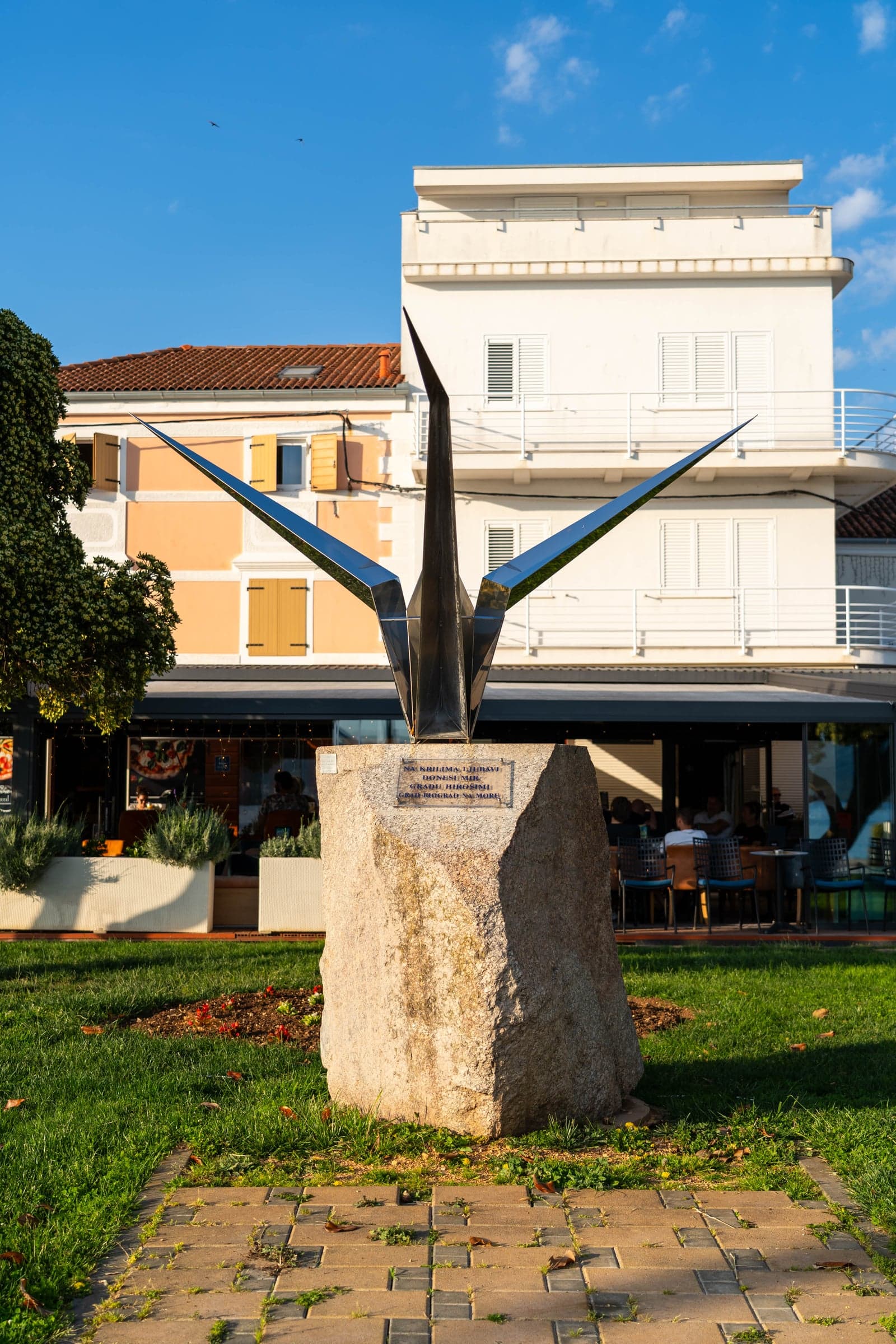
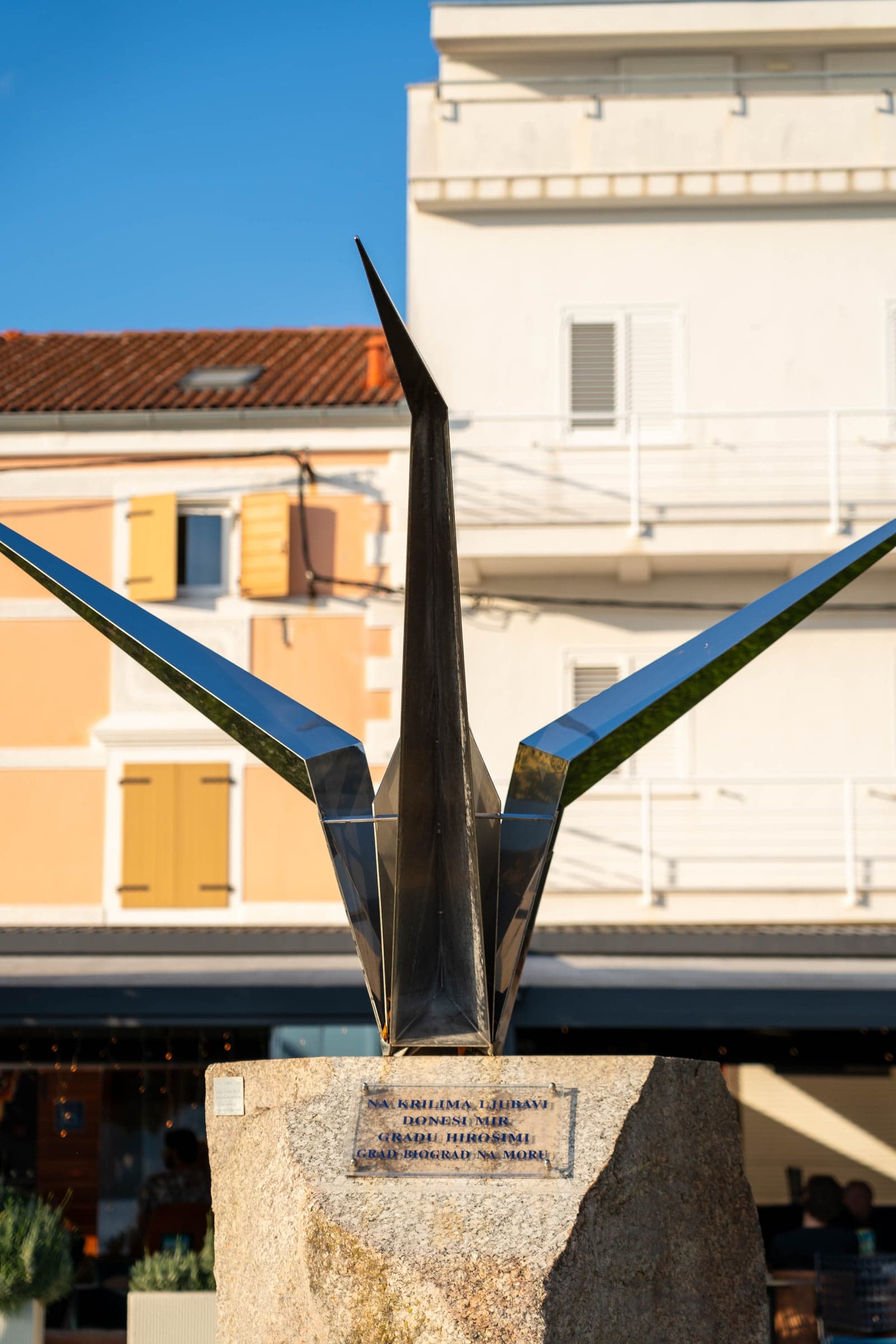
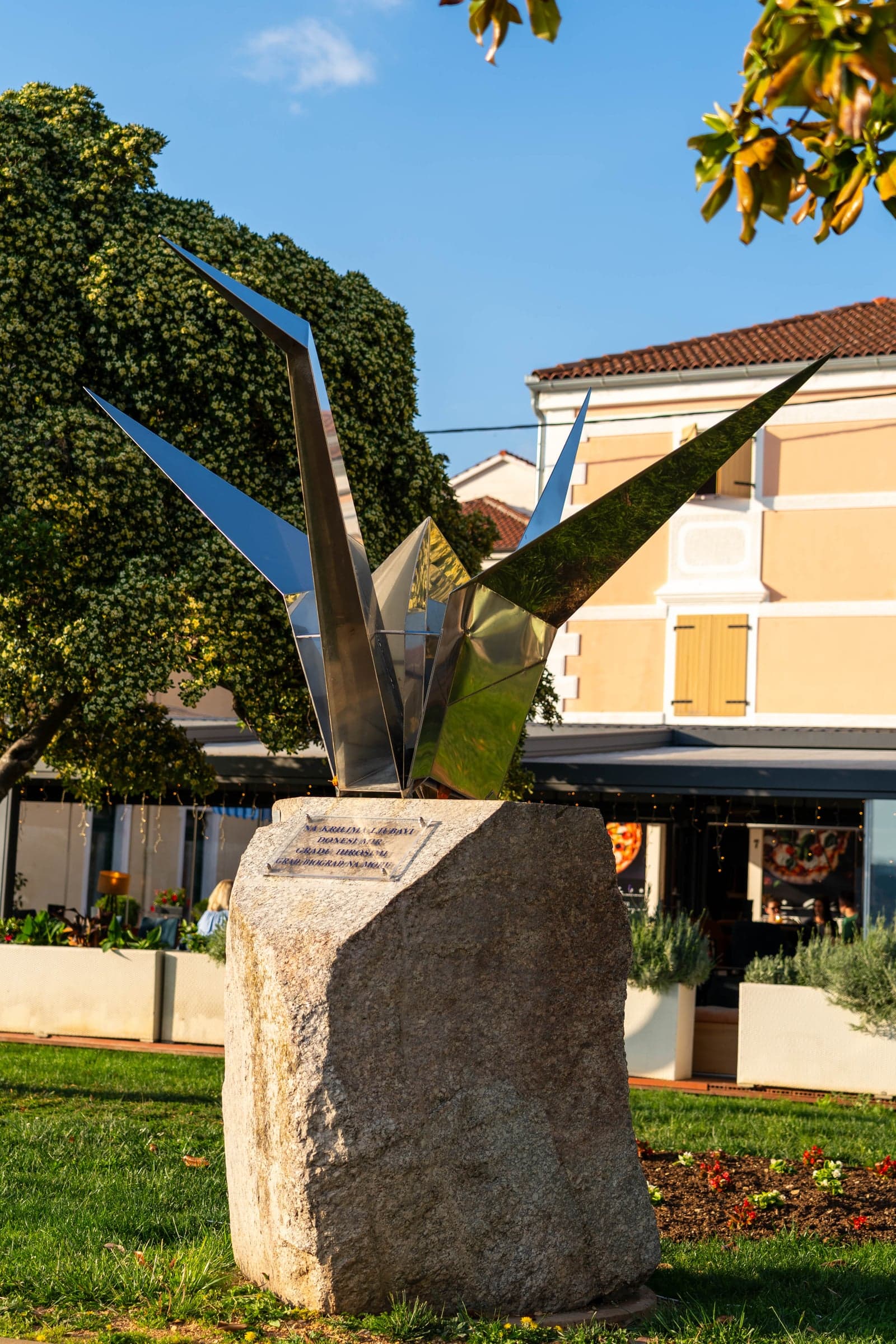
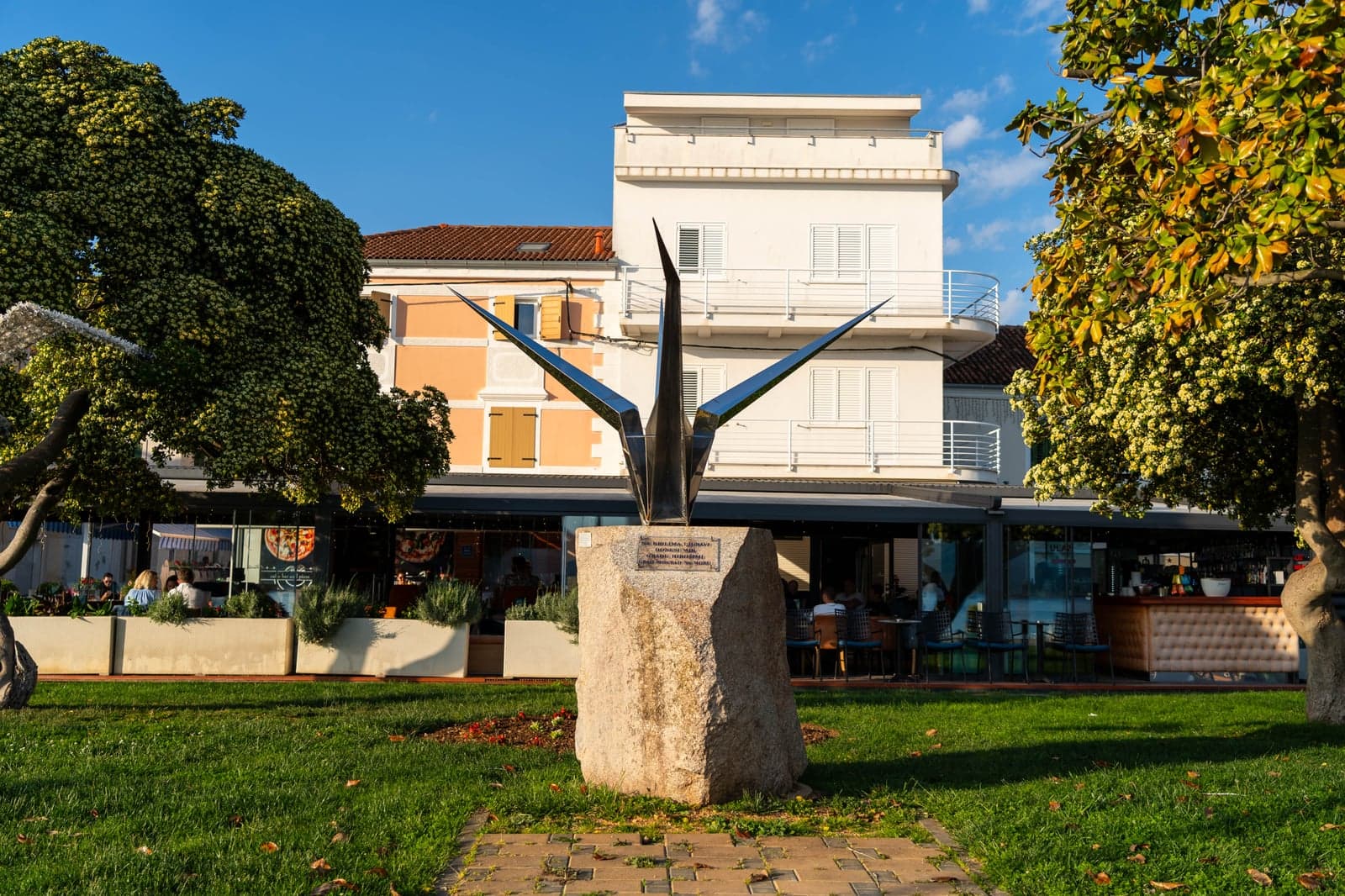
The monument was erected and unveiled on 30 April 2009 on the Biograd na Moru waterfront as a memorial to the suffering of the Japanese people from the atomic bombs dropped on Hiroshima and Nagasaki. It also commemorates the girl Sadako Sasaki, who fell ill with leukaemia caused by the dropped atomic bomb. The monument also symbolises the membership of the City of Biograd na Moru in the world organisation "Mayors for Peace", which fights against nuclear weapons. The City of Biograd na Moru, led by Mayor Ivan Knez, joined the global Mayors for Peace organisation in 2008. Mayor Knez was elected vice-president of its Executive Committee, and in 2018 received the Order of the Rising Sun from the Japanese government for his contributions to promoting peace in the world and a world free of nuclear weapons. According to the legend that a crane lives for a thousand years, Sadako decided to fold 1,000 origami cranes in the hope of recovering. Japanese belief holds that anyone who folds a thousand cranes will have their wish granted. Sadly, she managed to fold only 644 before she died. Her friends completed the thousand and buried her with them. Her cranes thus became a symbol of the wish for life, peace and a world free of nuclear weapons. Before she died, she said "It's good," and ate two spoonfuls of rice. The story of Sadako is told in Japanese schools on the anniversary of the bombing of Hiroshima and Nagasaki. Sadako is also the main character of the novel "Sadako Wants to Live" by the Austrian writer Karl Bruckner. The crane monument is the work of the academic sculptor Ante Brčić from Zagreb.